You tell yourself you’re just going to “put this away for now”.
Ten minutes later, you’re standing in the hallway with a half-open box, three random chargers in your hand, and no idea where anything lives. The cupboard is full. The drawer is full. Your brain is full.
You scroll past those picture-perfect organizing videos where people label every jar and decant their cereal into glass. You respect it. You also know that if you tried that, it would last about four days.
Still, a quiet thought nags at you when you can’t find your keys or your passport again.
There has to be a way to store things that doesn’t feel like a second job.
The simple rule that calms your storage chaos
Most people don’t have a storage problem.
They have a “too many decisions per object” problem. Every time you hold something in your hand, your brain spins: keep or toss, bedroom or office, box or drawer, labeled or not. That mental load is what makes you abandon the pile on the chair.
The trick is to stop treating storage as a case-by-case puzzle and turn it into a tiny reflex. One basic rule, applied again and again, beats the most beautiful color-coded system that only exists for two weeks.
Your house doesn’t need more boxes. It needs fewer questions.
Think of the friend whose place always looks “kind of tidy” even when they’ve been busy for weeks.
They’re not secretly tidying all night. They’ve just made peace with a very lazy formula: one category, one place. Tech goes in one basket. Papers in one vertical file. Bathroom products in one drawer. Nothing fancy.
I watched a colleague during a move do this in real time. Instead of asking, “Where should this pen go?”, she asked, “What is this?” and dropped it into the “desk stuff” box without thinking. On the other side of the move, unpacking was almost boring—open a box, empty it into its one spot. Efficient, if slightly unglamorous.
That’s the point.
Our brains love patterns.
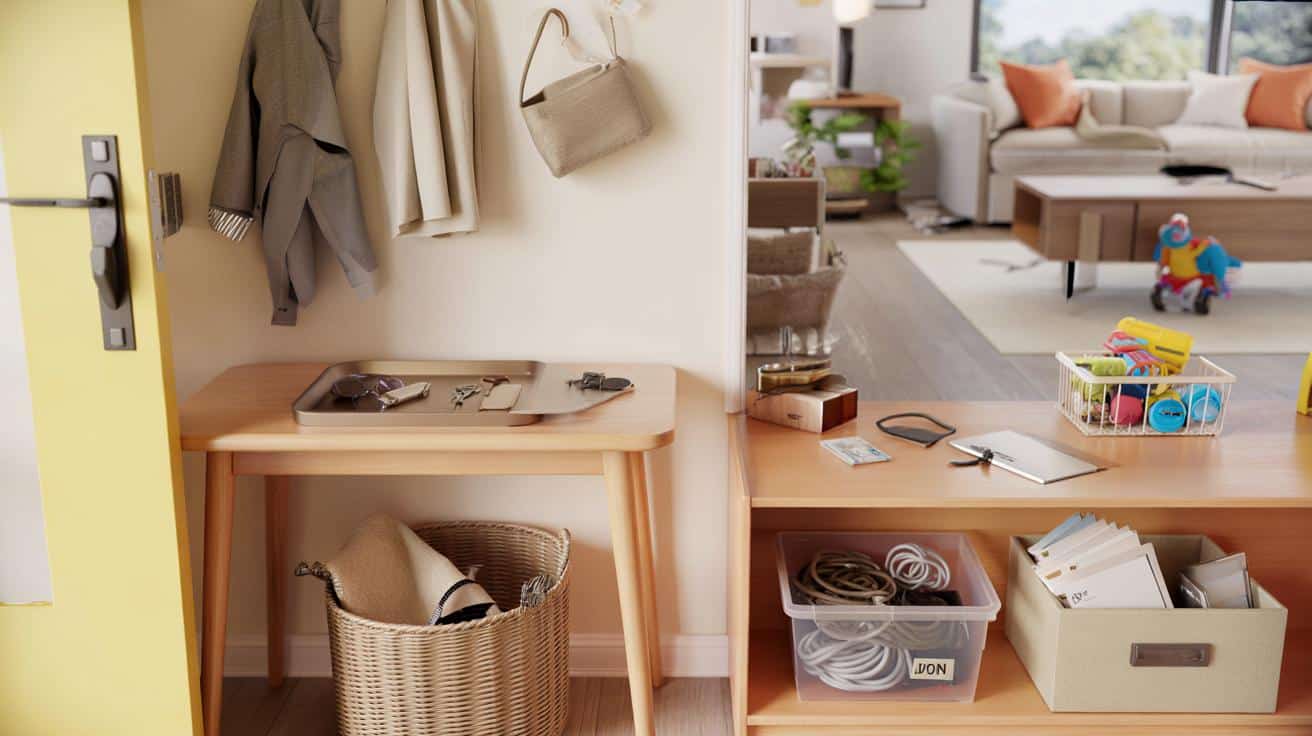
When similar things live together, retrieval becomes automatic: keys always on the tray by the door, receipts always in the same envelope in your bag. The category is the cue.
Overthinking storage usually comes from wanting the “perfect spot” for each object. That sounds smart, but it kills follow-through. Tiny frictions pile up: the box is too high, the lid annoying, the label outdated. You stop using it. *A “good enough” spot you use daily beats a perfect system you quietly abandon.*
Plain truth: nobody really does this every single day.
The goal is not perfection, just a default path where 80% of your stuff lands in the right zone without a committee meeting in your head.
➡️ This simple trick helps you remember what’s inside containers
➡️ Psychology explains why emotional patterns repeat even when situations change
➡️ “I didn’t realize how tense I was”: what my posture was silently doing to my body
➡️ Psychology explains why certain emotional triggers feel disproportionate but deeply real
➡️ The comforting baked chicken thighs recipe I make when I want dinner without stress
➡️ “I wasn’t overspending, I was underestimating this category”
➡️ If you feel emotionally unsettled after good news, psychology explains the anticipation effect
➡️ “I’m exhausted by expectations I never agreed to”: psychology explains emotional accumulation
Store faster by lowering the bar (on purpose)
Here’s a method that works even when you’re tired: the two-step storage pass.
Step one, you do a “rough landing”: create broad, forgiving zones where things can land quickly. Think “paper tray”, “mixed cables basket”, “random tools box”. No labels, no guilt. Just a landing strip.
Step two happens only when that zone feels full. That’s when you do a quick five-minute “refine”: throw away what’s obviously useless, group what repeats, shift anything that clearly belongs somewhere else. The refinement only happens occasionally, not every time you put something down.
Storage becomes a light habit, not a precision sport.
The biggest mistake people confess is buying storage before they know their own behavior.
They invest in a wall of boxes, then realize they always dump things on the nearest flat surface anyway. The boxes stay half empty, the table stays crowded, and they feel like they “failed at organizing”. You didn’t fail. The system didn’t match your real life.
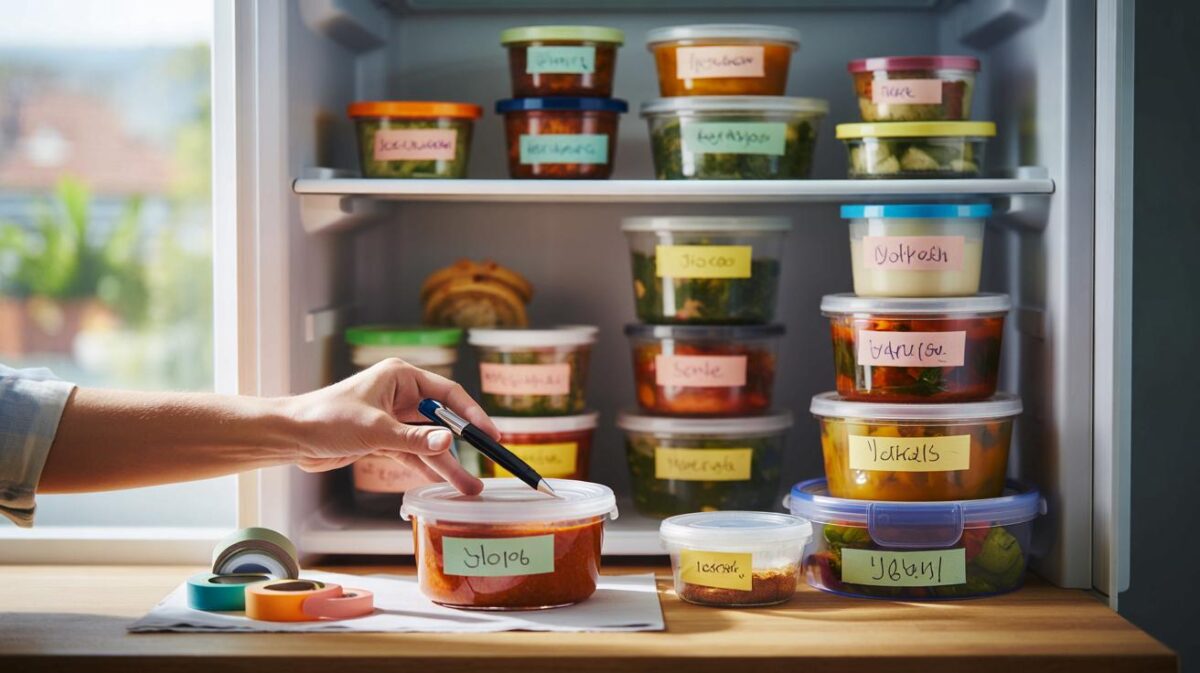
You also don’t need to label every container like a library archive. A piece of washi tape with “CABLES” scribbled on it works. One shoe box by the door for “returns and things to bring back to people” prevents a lot of lost bags and awkward DMs.
Be kind to the version of you who gets home tired and just wants to drop things somewhere that makes sense.
Sometimes the most efficient storage system is just a clear answer to the question, “Where does this go when I’m in a rush?”
- Create one “dump zone” per roomA tray, a basket, or a shallow box where today’s random objects can land. This avoids the “spread” effect across every surface.
- Use the “two of the same” ruleSee the second item of a kind (second charger, second pair of scissors)? That’s your signal to give that category a home: a small box, a jar, a pouch.
- Make storage visible, not buriedTransparent bins, open baskets, or shallow drawers beat deep, mysterious cupboards.
- Limit each container by volume, not willpowerWhen the box is full, that’s the moment to decide: keep, toss, or pass on. No quiet overstuffing.
- Store things where you actually use themTea near the kettle, tape measure near the toolbox, skincare in the spot where you actually get ready, not where you wish you did.
Living with “good enough” shelves and slightly messy boxes
There’s a quiet relief that appears when you stop trying to “optimize” your home like a project and just let it work like a tool.
You don’t need matching containers or a label maker to feel on top of your stuff. You need fewer choices, softer rules, and a couple of obvious landing spots that anyone in the house could guess.
Maybe your spices will never be in alphabetical order. Maybe your paperwork will live in one big upright folder labeled “Important” with sticky notes inside. Maybe your kids never put toys in the “right” bin but at least every toy ends up in some bin.
The win is not how it looks in a photo. The win is how quickly you can find what you need on a Wednesday morning when you’re already late.
| Key point | Detail | Value for the reader |
|---|---|---|
| One category, one place | Group similar items in a single, obvious zone instead of scattering them | Less thinking, faster retrieval, fewer “Where is it?” moments |
| Rough landing, then refine | Use broad zones daily, sort lightly only when they’re full | Reduces decision fatigue while still preventing long-term clutter |
| Store things where you use them | Place items near their real-life action spots, not where they “should” go | Makes storage intuitive for everyone in the home, not just you |
FAQ:
- How do I start if everything already feels overwhelming?Pick one tiny zone, not a whole room: the bedside table, the top of the dresser, the kitchen junk drawer. Give it one category rule (for example, “Only things I use every week”). Move everything else out to a temporary box. That quick win gives you energy for the next spot.
- What about sentimental items I don’t use but can’t throw away?Give them a dedicated “memory box” and limit that box by size. You’re not judging what’s inside, just agreeing that your memories live in that one place. When it’s full, you revisit, choose favorites, and let a few things go.
- How do I get other people in the house to follow the system?Make it so obvious they can’t really get it wrong. One basket by the door for keys and wallets, one tray for mail, one bin for toys in the living room. Explain it once, then let the space gently “teach” them by being the easiest option.
- Should I buy matching containers to stay motivated?Only after you’ve lived with your zones for a few weeks. Start with what you have—shoeboxes, jars, old baskets. Once you know which areas you actually use, you can upgrade the containers that do the most work.
- How often do I need to reorganize everything?Rarely. A five-minute reset when a box gets full or a shelf looks wild is enough. The goal is tiny, regular nudges, not big seasonal overhauls that leave you exhausted and back at square one three months later.