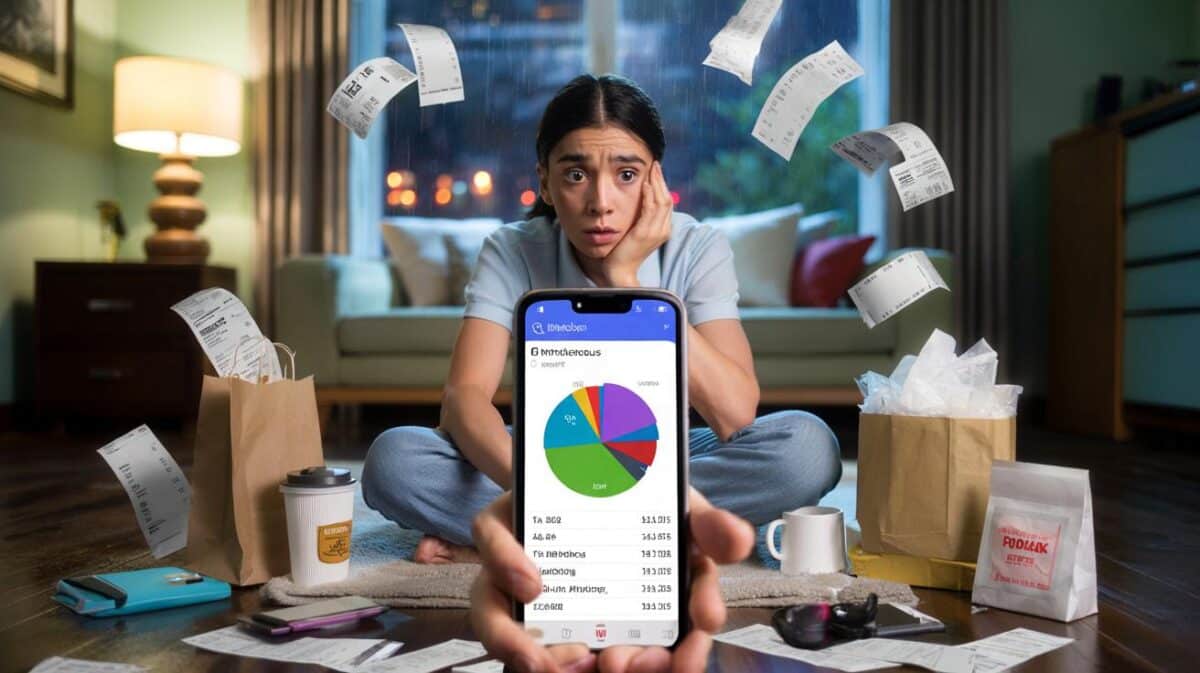
The message came on a Thursday morning, right between two work emails and an ad for half-price sneakers. “Your Money Date is today at 7:30 pm ❤️.” I actually laughed out loud. Money date? With who, my overdraft?
I’d set the reminder three weeks earlier and, if I’m honest, I’d already tried to forget it. Like a dentist appointment you booked in a burst of courage.
By 7:30, I was sitting at my kitchen table with a cup of tea, my banking app open and a knot in my stomach. Ten minutes later, the knot had started to loosen.
That was the night managing money stopped feeling like a fight and started feeling… lighter.
The day I stopped “doing money” on hard mode
Most of us treat our finances like that drawer in the hallway: the one you slam shut before visitors arrive. You know there’s chaos inside, you just don’t want to deal with it right now.
My habit used to be classic: ignore accounts all month, then panic when rent or a big bill hit. I’d scroll through my banking app like watching a horror movie through my fingers.
One evening, after a particularly painful overdraft fee, I realized my system wasn’t a system. It was just stress with Wi-Fi.
So I tried something tiny. Every Thursday, 15 minutes. Same time, same place. Phone on airplane mode, laptop open, bank and credit card tabs ready. I called it my “money date” because “weekly financial shame review” didn’t sound very catchy.
At first, I did almost nothing. I’d just check balances, glance at upcoming bills, see if anything looked weird. The point wasn’t to fix my entire life. It was just to show up.
Two months later, Thursday nights felt safer than payday. I knew what was coming. I knew what had already gone. And my stress, that low hum in the background of my week, had started to turn down.
➡️ If you feel emotionally unsettled after good news, psychology explains the anticipation effect
➡️ “I’m 65 and walking downhill scared me”: the balance reflex that weakens with age
➡️ This is how to store things without overthinking it
➡️ This simple trick helps you remember what’s inside containers
➡️ “I thought effort was the answer”: why gentler habits worked better
➡️ “I’m exhausted by expectations I never agreed to”: psychology explains emotional accumulation
➡️ This is why silence feels uncomfortable for many
➡️ Psychology explains why certain emotional triggers feel disproportionate but deeply real
What changed wasn’t the numbers on my screen. It was the rhythm. Money had stopped being an emergency and become a routine. Like brushing my teeth: not particularly glamorous, but if I skipped it, I felt off.
The habit that made everything lighter was brutally simple: I stopped managing money “whenever I had time” and turned it into a small, recurring appointment. Same day, same hour, same steps.
Consistency sounds boring. Yet boredom is the opposite of financial drama. When you give your brain one stable, predictable moment to look at your money, the rest of the week frees up. You’re not constantly wondering, “Can I afford this?” because you already had that conversation with yourself.
The exact habit: one weekly Money Date
Here’s what that habit looks like in real life. Once a week, you sit down somewhere quiet with your accounts. Not once a quarter, not “when the card declines.” Once. A. Week.
Set a recurring reminder on your phone with a name that doesn’t make you want to cry. “Money Date,” “Cash & Chill,” “Thursday Check-in” — anything that feels like you, not your accountant.
Then follow the same short script every time:
1) Open your main bank account and credit card.
2) Note your balances.
3) Scan recent transactions.
4) Look at the next 7–10 days: incoming money, expected bills, social plans.
That’s it for the basic version. Fifteen minutes. No spreadsheets required.
Here’s what most people do instead: they try to do everything in one heroic session once a month. Budget, debt plan, investments, big life decisions… all on a random Sunday when they’re already exhausted. Then they burn out and avoid money for weeks.
Let’s be honest: nobody really does this every single day. That “track every cent in real time” advice sounds good on Instagram, but life is messy. Kids get sick, trains are late, you just want to watch a series and eat pasta over the sink.
A weekly date is realistic enough to keep and regular enough to change your relationship with money. The lightness comes from knowing there is a specific time to worry, so you don’t have to worry all the time.
During one of my early money dates, I spotted three tiny subscriptions I’d forgotten about: a meditation app, a trial for a design tool, and a fitness platform I hadn’t opened in months. They added up to the price of dinner with a friend.
Cancelling them felt like finding loose cash in an old coat pocket. Yet the real shift wasn’t the savings, it was the feeling that I was back in the driver’s seat.
*“For the first time, I felt like my money and I were on the same team, not in a constant argument.”*
- Pick one fixed day and time for your money date.
- Keep a simple, repeatable checklist on your phone.
- Cap it at 15–25 minutes so it doesn’t become overwhelming.
- Start with awareness (what happened this week?) before decisions.
- End with one tiny action: cancelling, moving, or planning a single thing.
Why this small habit makes everything feel lighter
When money talk feels heavy, it’s rarely just about numbers. It’s about surprise. The “how is my card already maxed?” moment. The email from the bank you don’t want to open. The bill you forgot about.
A weekly date removes a big part of the surprise factor. You start seeing patterns: that “quick coffee” total for the week, the food delivery that quietly doubled, the random impulse buys that don’t even make you happy.
You’re not shaming yourself. You’re just watching your own life, from a slight distance, once a week. That distance is where lighter decisions start.
There’s also a psychological trick hiding inside this habit. By naming it and scheduling it, you turn finances from a vague, scary cloud into a simple routine task. The brain loves routines. They feel safe. Predictable.
Many people think they need discipline or willpower to handle money. What they really need is less decision fatigue. A weekly ritual removes hundreds of micro-decisions like “Should I check my account?” because the answer is already set. It’s Thursday night. You’ll check then.
One plain-truth sentence: most money anxiety lives in the “I don’t know” zone, and the fastest way out is to know a little bit more, regularly, without drama.
For some, this habit becomes a couple ritual. Two people, one shared calendar event, one laptop on the table. You look at joint costs, upcoming trips, birthdays, maybe a bigger project like a move or a renovation. For others, it’s completely solo, almost like journaling.
The emotional payoff is the same: a drip-feed of clarity instead of a flood of chaos every few months.
Over time, your money date can gently grow. Once checking balances feels normal, you might add:
– A quick glance at savings.
– A small extra payment to a debt.
– A five-minute think about long-term goals.
The habit that started as “just survive the week” quietly becomes “where do I want my money to take me next?” That’s when everything feels lighter, not because you’re rich, but because you’re finally in conversation with your own life.
A lighter way to live with money
Imagine opening your banking app and not feeling your stomach drop. Not because you won the lottery, but because you already know roughly what you’ll see. The numbers might not be perfect. They rarely are.
Yet they’re familiar. You’ve looked them in the eyes every week. You’ve had small, honest talks with yourself about what matters: the dinners that feel worth it, the subscriptions that don’t, the trip you want more than new headphones.
This is what a simple habit quietly does. It doesn’t erase all problems. It just gives them a place to sit so they don’t chase you around all day.
The funny part is that once the dread goes down, creativity goes up. People start asking different questions during their money dates. “How do I earn a bit more?” “What if I tried three no-spend days?” “Could I swap this expensive habit for something that actually makes me feel good?”
You move from reacting to choosing. From “I can’t” to “If I do X, then I can do Y.”
That’s the real lightness: the sense that your money story is not just happening to you anymore. You’re editing it as you go, one small Thursday at a time.
If you’re reading this and your brain whispers, “I should do that,” don’t wait for the “perfect” week or the “right” salary. Pick a day, set a reminder with a name that makes you smile, and promise yourself 15 quiet minutes.
Not to fix everything. Just to look. To listen. To start talking to your money like you talk to a complicated friend you’d like to understand better.
The habit that makes managing money feel lighter isn’t glamorous. It won’t impress anyone on social media. Yet inside your actual life — the rent, the grocery receipts, the late-night worries — **it can feel like opening a window in a stuffy room.**
| Key point | Detail | Value for the reader |
|---|---|---|
| Weekly Money Date | Short, scheduled check-in with accounts and upcoming expenses | Reduces anxiety by replacing surprise with routine |
| Simple, repeatable script | Balances, recent transactions, next 7–10 days, one tiny action | Makes money management doable without complex tools |
| Shift from crisis to clarity | Moves finances from emergency mode to gentle, ongoing attention | Creates a lighter, more empowered relationship with money |
FAQ:
- Question 1How long should a money date last?
- Answer 1Start with 15–20 minutes. Long enough to check balances, transactions, and the coming week. If you feel like going deeper some weeks, fine, but keep the basic version short so you don’t avoid it.
- Question 2What if my finances are a mess and I’m scared to look?
- Answer 2Begin with pure awareness. For the first two or three dates, only look and write down what you see: balances, debts, bills. No fixing yet. The fear usually drops once things move from “unknown” to “known.”
- Question 3Do I need a fancy app or spreadsheet?
- Answer 3No. A banking app, a notes app, and maybe a basic spreadsheet are plenty. The habit is more powerful than the tool. You can always upgrade tools once the routine is stable.
- Question 4Should I do this alone or with my partner?
- Answer 4If you share finances, a joint money date can reduce arguments and surprises. You can also keep a solo one for your personal accounts. The key is that at least one recurring check-in exists.
- Question 5What if I skip a week?
- Answer 5Just show up the next week without guilt. Treat it like missing a workout: annoying, not catastrophic. **The power of this habit comes from coming back to it, not from being perfect.**