The jar sat in the back of the fridge, choked by frost and guilt. A cloudy plastic box leaned against it, stained orange from some forgotten sauce. You opened, sniffed, frowned, hesitated. Was this the soup you promised to freeze “for next week”? Or that experimental curry from three Tuesdays ago, now living a second life as a science project.
Your hand hovered over the trash can. You hate wasting food, yet you hate food roulette even more. So the container went in the bin, still half full, and you told yourself you’d be more organized next time.
Next time never comes on its own.
The tiny mental shortcut your containers are missing
Most of us rely on two fragile guides to remember what’s inside containers: our nose and our future memory. Both are terrible assistants. The nose only kicks in when it’s already too late. And future memory, that thing you trust when you say “oh I’ll definitely remember this”, is a well-documented liar.
There’s a quieter, smarter option hiding in plain sight. A tiny trick that turns every box, jar, or mystery tub into a mini billboard your brain can read in half a second. No apps, no smart fridge, no complicated system. Just a different way of “labeling” that your brain actually loves to cooperate with.
Picture this: a shared flat in autumn, three roommates, one fridge, chaos. Someone buys yogurt, someone else cooks lentil stew, another preps overnight oats. Two weeks later? Five identical glass jars lined up like suspects in a police lineup. Nobody remembers whose is whose or what’s what.
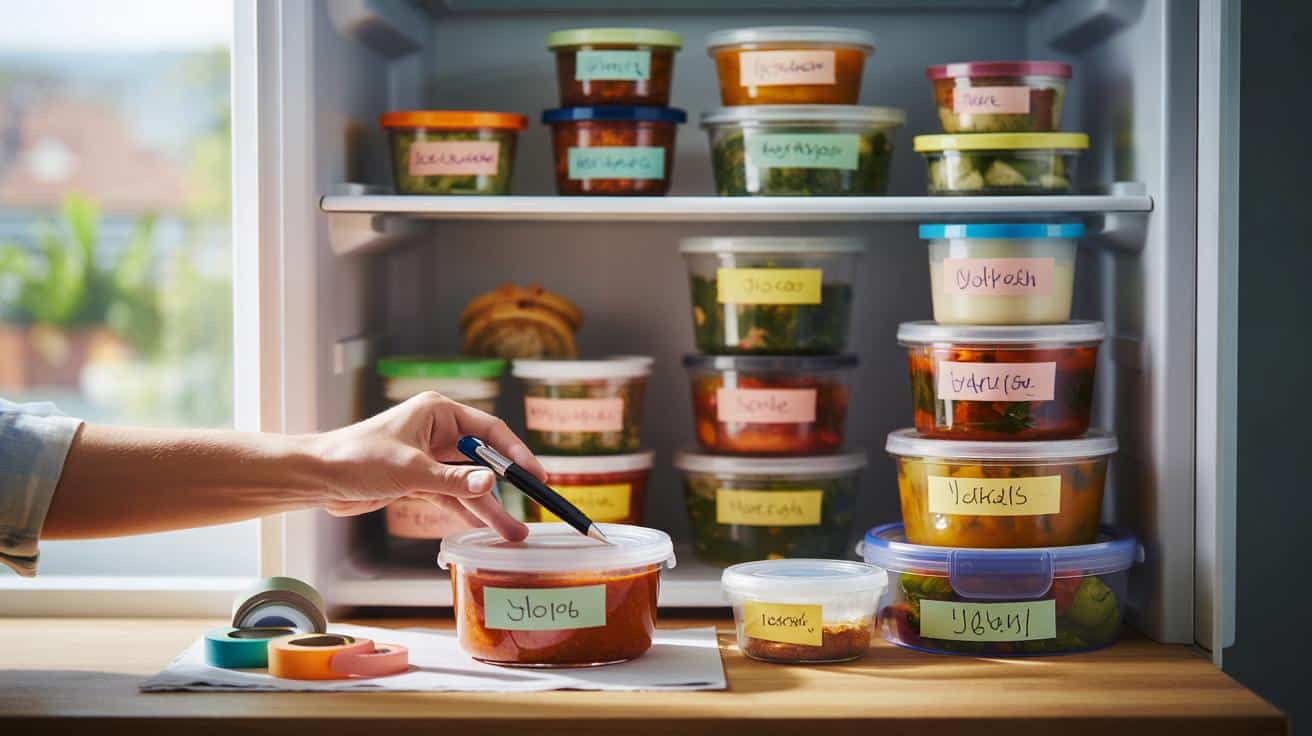
One roommate, Ana, got tired of “sniff-and-guess” meals. She started doing something strange: every time she put food in a container, she grabbed a cheap roll of colored masking tape, slapped a small strip on the side, and wrote three things only: name, date, owner initial. That was it. Within a month, leftover waste dropped, arguments stopped, and everyone copied her. The fridge looked like a color-coded library. The mystery-jars era ended almost overnight.
This works because your brain is lazy in a very predictable way. It doesn’t like decoding, it prefers shortcuts. When you give each container a clear visual signal plus a few simple words, you remove the need for “thinking” and replace it with instant recognition. That colored strip becomes a cue, the short label becomes the story.
You’re not just writing on tape; you’re outsourcing memory from your head to your environment. Psychologists call this distributed cognition, but you feel it as relief. Less pressure to remember, less decision fatigue when you open the fridge, less guilt when you find something that actually still looks edible. The trick is surprisingly small. The impact isn’t.
The simple trick: label like a lazy detective
Here’s the trick in its simplest form: every time you close a container, spend 5–10 seconds turning it into a “case file”. Stick on a piece of tape or a small label, writing three ultra-short clues: what it is, when it was made, and who it belongs to. Example: “Tomato soup – Jan 26 – L”. Nothing poetic, nothing detailed, just enough to tell your brain, “You know exactly what this is.”
➡️ If you feel emotionally alert all the time, psychology explains the mental state behind it
➡️ If you feel emotionally unsettled after good news, psychology explains the anticipation effect
➡️ “I’m exhausted by expectations I never agreed to”: psychology explains emotional accumulation
➡️ The habit of staying busy all the time often hides a psychological discomfort with stillness
➡️ The comforting baked chicken thighs recipe I make when I want dinner without stress
➡️ If you feel uncomfortable being fully honest, psychology explains what your mind is protecting
➡️ I noticed my home stayed cleaner once I stopped cleaning certain areas so often
If you don’t have tape, a marker straight on the lid works too. If you hate dates, use “Mon”, “Tue”, “Fri” style. The magic is not in the tools. It’s in repeating one tiny ritual every single time, until your containers are no longer mysteries but quick decisions waiting on a shelf.
Most people fail not because they lack a system, but because they build one their real life can’t sustain. Fancy labels that require a printer. Color codes nobody remembers. Long descriptions that feel like homework when you’re tired after dinner. Let’s be honest: nobody really does this every single day.
That’s why the lazy-detective method works. Three micro-pieces of info, written fast, on whatever surface you’ve got. It fits the moment when you’re scraping the last bit of pasta into a box while already thinking about the couch. The path has to be frictionless or you’ll drop it by Wednesday. *The goal isn’t perfection, it’s a habit that survives bad days.*
You can upgrade this trick slightly without making it complicated. One way is to pair words with colors. For example, blue tape for cooked meals, green for veggies, yellow for snacks, red for “eat today”. When you open the cupboard or fridge, your eyes scan for color first, and the label just confirms the detail. It feels oddly satisfying.
“Once I started using red tape for ‘urgent’ leftovers, I stopped losing so much food,” says Emma, 34, who lives with two kids and a permanently crowded refrigerator. “The kids even know: red means ‘eat this first’. We almost never throw away containers full of mystery food now.”
- Keep one pen and one tape roll right next to the containers
- Use the same three clues every time: name, date, owner
- Pick simple color meanings you won’t forget
- Accept that some labels will be messy or crooked
- Remove old labels in batches once a week
Beyond the fridge: letting your environment remember for you
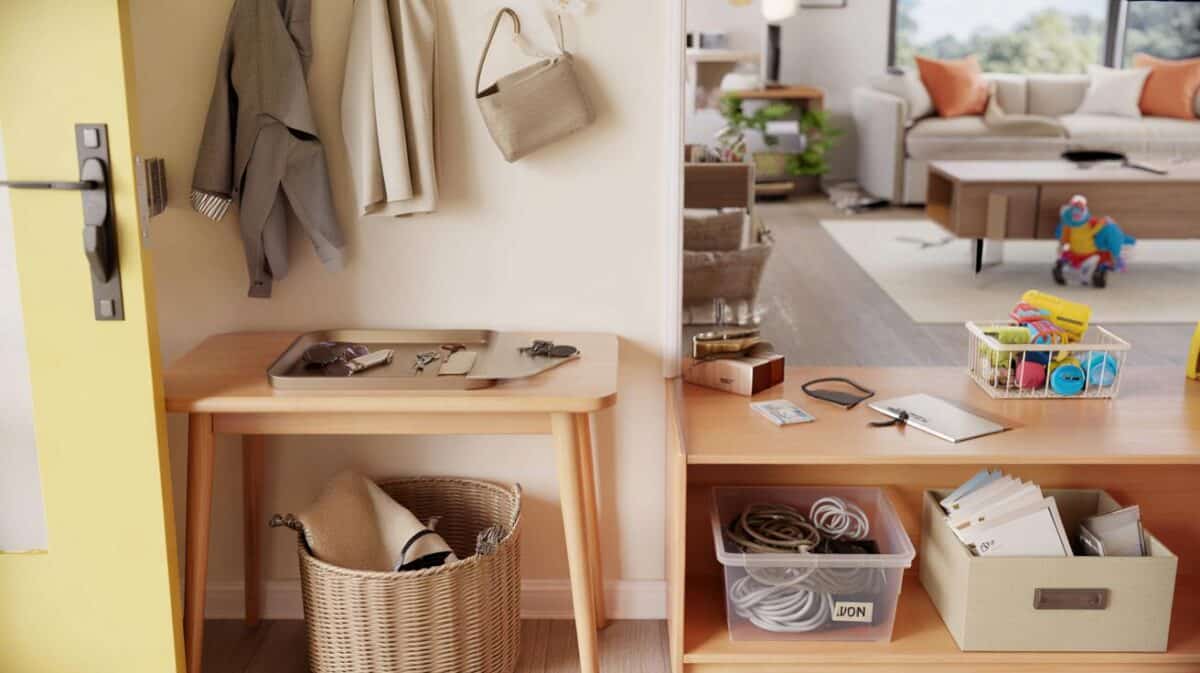
Once you start, this little trick tends to spread. The box of cables you used to dread opening? A strip of tape that says “Phone chargers + HDMI” suddenly turns it from chaos to clarity. The opaque bin under the bed? “Winter sweaters – keep” saves you from unpacking everything next season. A craft box labeled “Kids – painting stuff only” keeps two worlds from colliding on a rainy Sunday.
You start to notice the quiet relief that comes when objects tell you their story before you touch them. You waste less time opening, closing, searching, and muttering under your breath. You feel a bit more in control, not because you became hyper-organized overnight, but because your containers started doing some of the remembering for you.
Little by little, the question shifts from “What on earth is in here?” to “What do I actually want to keep, use, or share today?” And that’s where the real change begins.
| Key point | Detail | Value for the reader |
|---|---|---|
| Use simple labels on every container | Write name, date, and owner in 5–10 seconds | Reduces food waste and mystery leftovers |
| Add color as a quick visual cue | Color tape or pens for categories like “eat today” | Speeds up decisions when opening the fridge or cupboard |
| Let the habit spread beyond the kitchen | Label boxes, bins, and jars across the home | Saves time, stress, and mental load in daily life |
FAQ:
- How do I start if my fridge is already full of mystery containers?Pick one shelf, empty it, throw out what’s clearly gone, and relabel only what still looks and smells fine. Start fresh from that shelf onward instead of trying to fix everything at once.
- What if I’m too tired after cooking to label anything?Put the tape and pen exactly where you close the containers, not in a drawer. Turning it into part of the “lid-closing” movement makes it almost automatic.
- Do I really need dates, or is the name enough?The date is what stops “maybe later” from turning into “how long has this been here?” Even writing just the weekday (“Mon”, “Thu”) already helps your future self a lot.
- Which tape or marker works best on containers?Low-tack masking or painter’s tape with a fine-tip permanent marker usually holds well but still peels off cleanly. Test one container first to see how it behaves after washing.
- Can a digital app replace physical labels?Apps can help some people, yet your eyes hit the container long before you open your phone. A quick physical label is the fastest, most reliable reminder in day-to-day life.