You change cities, change partners, change jobs.
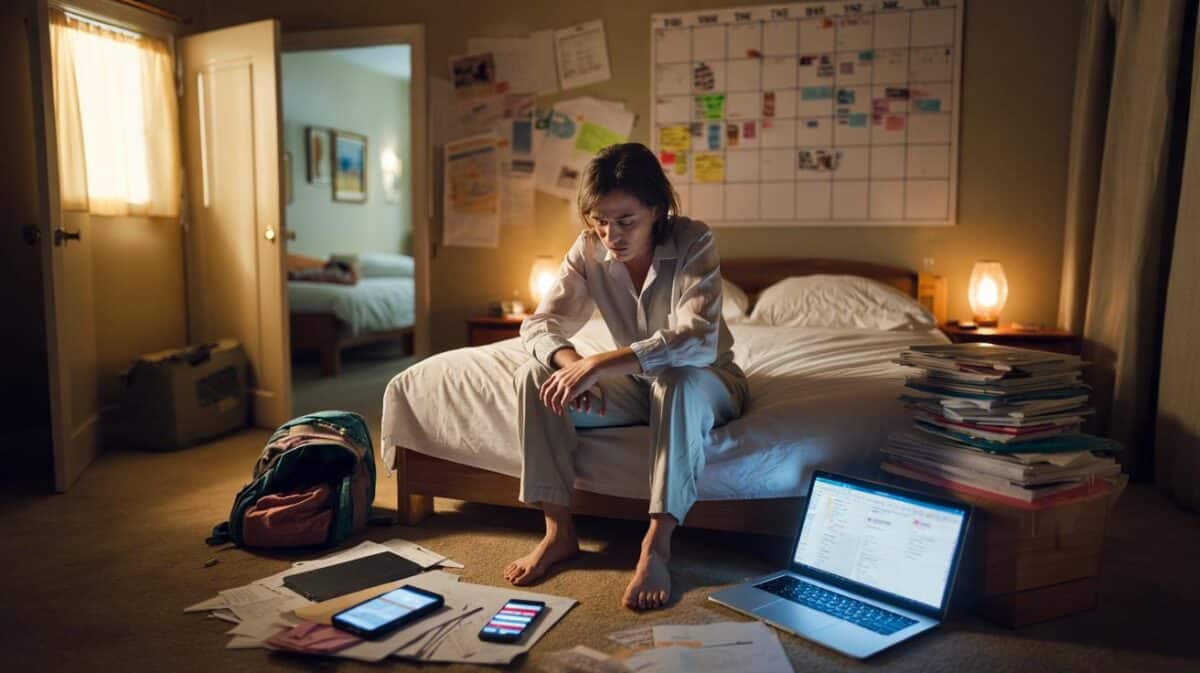
And yet at 11:37 p.m., alone with your thoughts and the blue light of your phone, you feel exactly the same as you did three years ago in a totally different life.
New people, same knot in the stomach. New office, same panic before meetings. New relationship, same fear they’ll leave.
On paper, everything’s different.
Inside, it’s like someone pressed replay.
You tell yourself, “This time I’ll react differently.”
Then the familiar anger, anxiety, or silence slides back in, almost automatically.
The faces change.
The emotional script doesn’t.
Why your brain keeps repeating the same emotional movie
Emotions feel wild and spontaneous, yet most of them run on old, well-worn tracks.
Neuroscience has a simple, slightly brutal explanation: your brain loves shortcuts.
Every time you react a certain way, your brain saves energy by turning that response into a pattern.
Over time, the pattern becomes faster than your conscious intention.
So you promise yourself you won’t freak out in your next relationship.
But the second someone doesn’t text back, your body launches the old alarm system.
Different situation, same wiring.
It’s not a lack of willpower.
It’s automation.
Take this classic story.
Someone grows up with a distant, distracted parent who never really had time for their feelings.
➡️ This is how to store things without overthinking it
➡️ This is why silence feels uncomfortable for many
➡️ This simple trick helps you remember what’s inside containers
➡️ “I thought effort was the answer”: why gentler habits worked better
➡️ “I’m 65 and walking downhill scared me”: the balance reflex that weakens with age
➡️ “I’m exhausted by expectations I never agreed to”: psychology explains emotional accumulation
➡️ Why your body feels better with gentle structure
Years later, they find themselves drawn to partners who are charming, busy, slightly emotionally unavailable.
At first, it feels intense, electric, “meant to be.”
Three months in, they’re anxiously checking their phone, decoding every silence, obsessively replaying conversations.
They swear they’ll never date this “type” again.
Next year, new name, new haircut, same dynamic.
On the outside, it looks like bad luck.
On the inside, it’s a familiar emotional climate they unconsciously recognize as “home.”
Psychologists call this emotional repetition compulsion.
Your nervous system is wired to seek the known, not the healthy.
Old patterns feel safer than unfamiliar peace.
Your brain thinks, “I’ve survived this before, I know this territory,” even if that territory is anxiety or shame.
So you walk into new situations carrying an invisible script:
“I’ll probably be ignored.”
“I’ll end up rejected.”
“I have to prove I deserve to be here.”
Reality then gets filtered through that script.
Neutral events look threatening.
Kind people seem suspicious.
*You don’t just remember the past; you quietly re-create the conditions to feel it again.*
How to interrupt a pattern that feels bigger than you
One surprisingly effective method starts before the emotion explodes: naming the pattern out loud.
Not in a vague way, but in a very specific sentence.
For example: “This is the part where I panic when someone takes a long time to reply.”
Or: “This is the moment I usually shut down in meetings.”
That tiny pause moves you from actor to observer.
You’re still in the movie, but now you can see the camera.
From there, your job isn’t to “stop feeling” but to slow the chain reaction by 10%.
That small delay often creates just enough space for a slightly different choice.
Most people go straight to self-blame.
“Why am I like this?”
“Why can’t I just be normal?”
That spiral only glues the pattern deeper.
Shame accelerates the very reactions you’re trying to calm.
A more realistic step is to track your “early warning signals” like a curious journalist, not a judge.
Maybe your early sign is a tight jaw.
Or a sudden urge to check your phone.
Or that familiar mental line: “Here we go again.”
Let’s be honest: nobody really does this every single day.
You’ll miss it sometimes.
That’s part of changing it, too.
The therapist and author Janina Fisher often says, “Your reactions are not evidence of who you are, they’re evidence of what you lived through.”
So instead of asking “What’s wrong with me?”, try asking, “Where did I learn to feel this way?”
Sometimes the answer comes fast.
Sometimes it arrives in pieces.
To hold on to those pieces, it helps to keep a short, visual list of your recurring patterns and new options:
- Trigger: “Someone cancels plans” → Old pattern: “They don’t care about me” → New option: “Ask a direct question instead of imagining a story.”
- Trigger: “Critical feedback at work” → Old pattern: “I’m a failure” → New option: “Write down three concrete things I did well this week.”
- Trigger: “Partner goes quiet” → Old pattern: “Panic + cling or withdraw” → New option: “Name the fear calmly: ‘I’m starting to imagine you’re angry or leaving.’”
Even one new option, used once a week, starts to confuse the pattern.
And that confusion is good news.
Living with your patterns without letting them drive
There’s a strange peace that comes when you realize: some of your emotional reflexes may never disappear completely.
They can soften, loosen, change shape.
They might still knock on the door in stressful seasons.
You don’t have to wait for a total reset to live differently.
You only need enough awareness to say, “Oh, this again,” and enough courage to choose one degree of difference.
Maybe this time, you send the honest text instead of ghosting.
Maybe you ask your boss for clarity instead of burning out in silence.
Maybe you stay in the room for five more uncomfortable minutes.
Those tiny, unglamorous moves are where emotional history quietly rewrites itself.
| Key point | Detail | Value for the reader |
|---|---|---|
| Patterns are brain shortcuts | Repetitive emotional reactions are energy-saving habits wired by past experiences | Reduces self-blame and explains why “trying harder” hasn’t been enough |
| Familiar doesn’t mean healthy | We’re unconsciously drawn to what feels known, even when it hurts | Helps spot relationships and situations that repeat old wounds |
| Small interruptions change the script | Naming the pattern, spotting early signals, and choosing 1% different actions | Gives a realistic, doable path to gradually shift long-standing emotional cycles |
FAQ:
- Question 1Is repeating emotional patterns a sign that I’m “broken”?
No. Repeating patterns usually mean your brain and nervous system adapted well to old conditions and just haven’t updated to your current life yet. It’s a survival success story that needs a software update, not proof that you’re defective.- Question 2Can I change these patterns without therapy?
You can soften and shift a lot on your own by observing triggers, naming patterns, and practicing new responses. That said, therapy can speed things up and offer support when the roots are deep, especially for patterns linked to trauma or childhood neglect.- Question 3How do I know if I’m re-creating my past in relationships?
Look for déjà vu feelings: “I’ve never met this person before, but this dynamic feels eerily familiar.” Or notice when you react much more intensely than the situation seems to justify. Those are common signs the past just walked into the room.- Question 4Why do I keep choosing the same kind of partner or boss?
Your nervous system often reads familiar emotional climates as “safe,” even when they’re chaotic or cold. You might be mistaking intensity for love, or pressure for value. Spotting that tendency is the first step to choosing people who feel calm instead of dramatic.- Question 5How long does it take to change an emotional pattern?
There’s no fixed timeline. Some shifts happen in weeks once you see the pattern clearly. Others take months or years to truly soften. Progress usually looks like this: the reaction still appears, but it comes later, feels weaker, and passes faster. Over time, it stops being the only option.